Decision and workflow
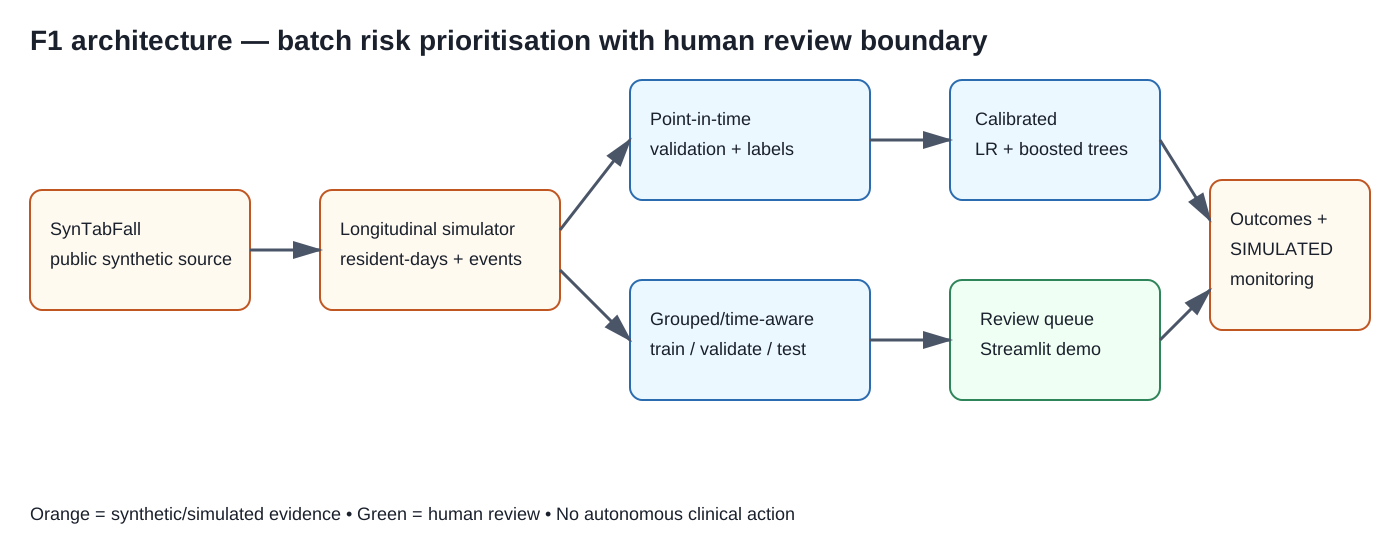
The workflow scores fictional aged-care resident-days for a seven-day fall outcome. Its decision is prioritisation for human review, not diagnosis or autonomous care. The design treats review capacity, false negatives, missing data, and repeat alerts as part of the problem definition.
System approach
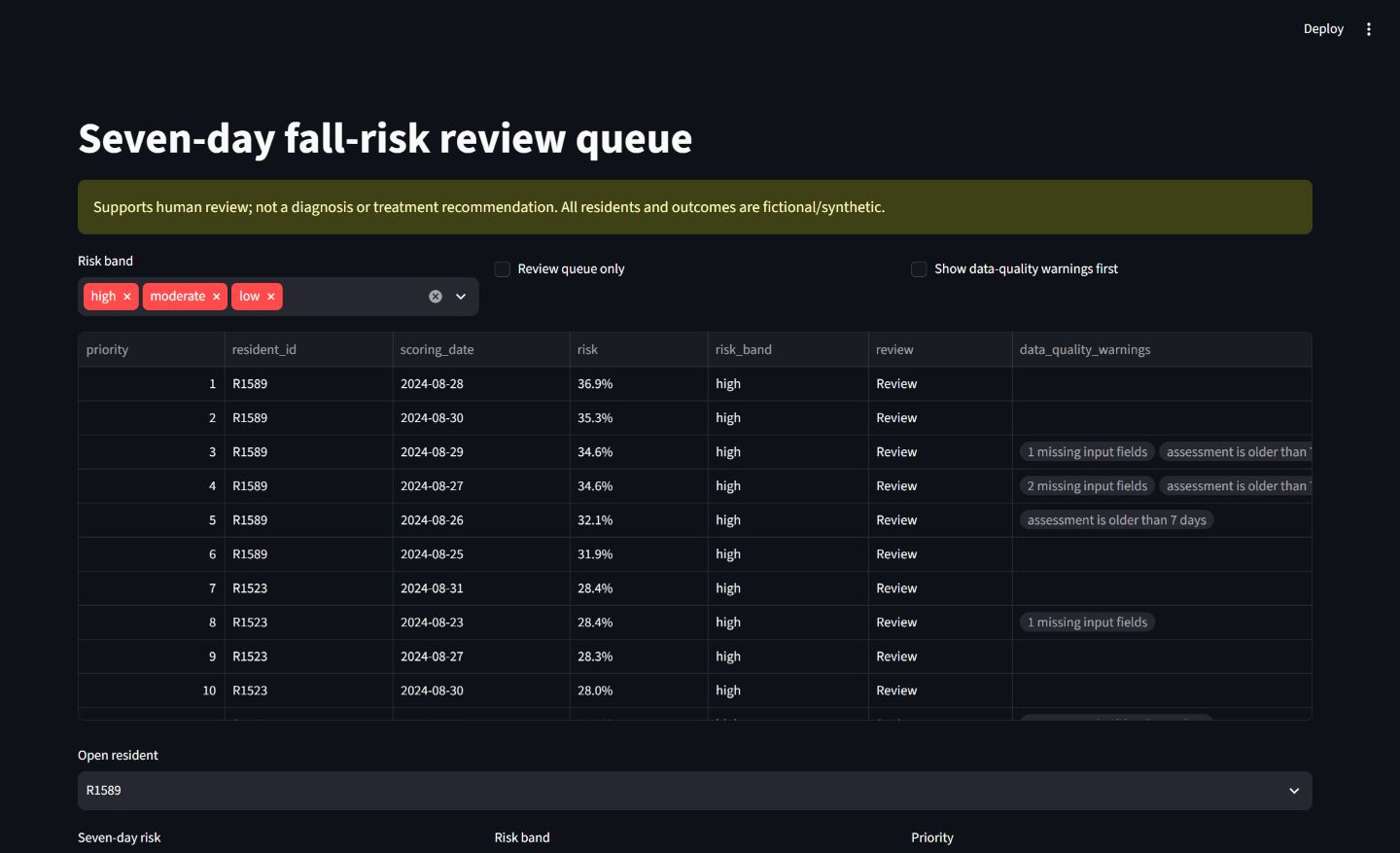
The project uses resident-disjoint, point-in-time synthetic data and compares calibrated logistic regression with boosted trees. A Streamlit review queue presents risk bands, indicative factor explanations, missing-data warnings, and an explicit clinical-safety boundary.
Baseline and evaluation
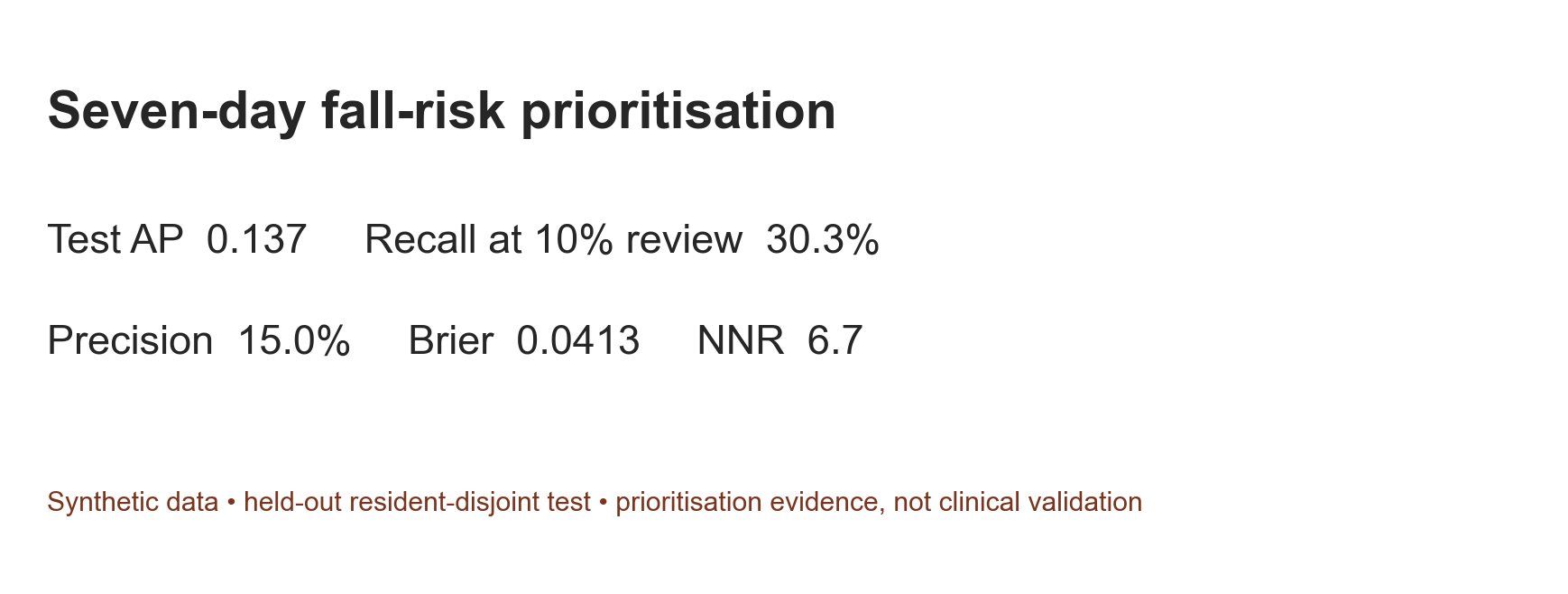
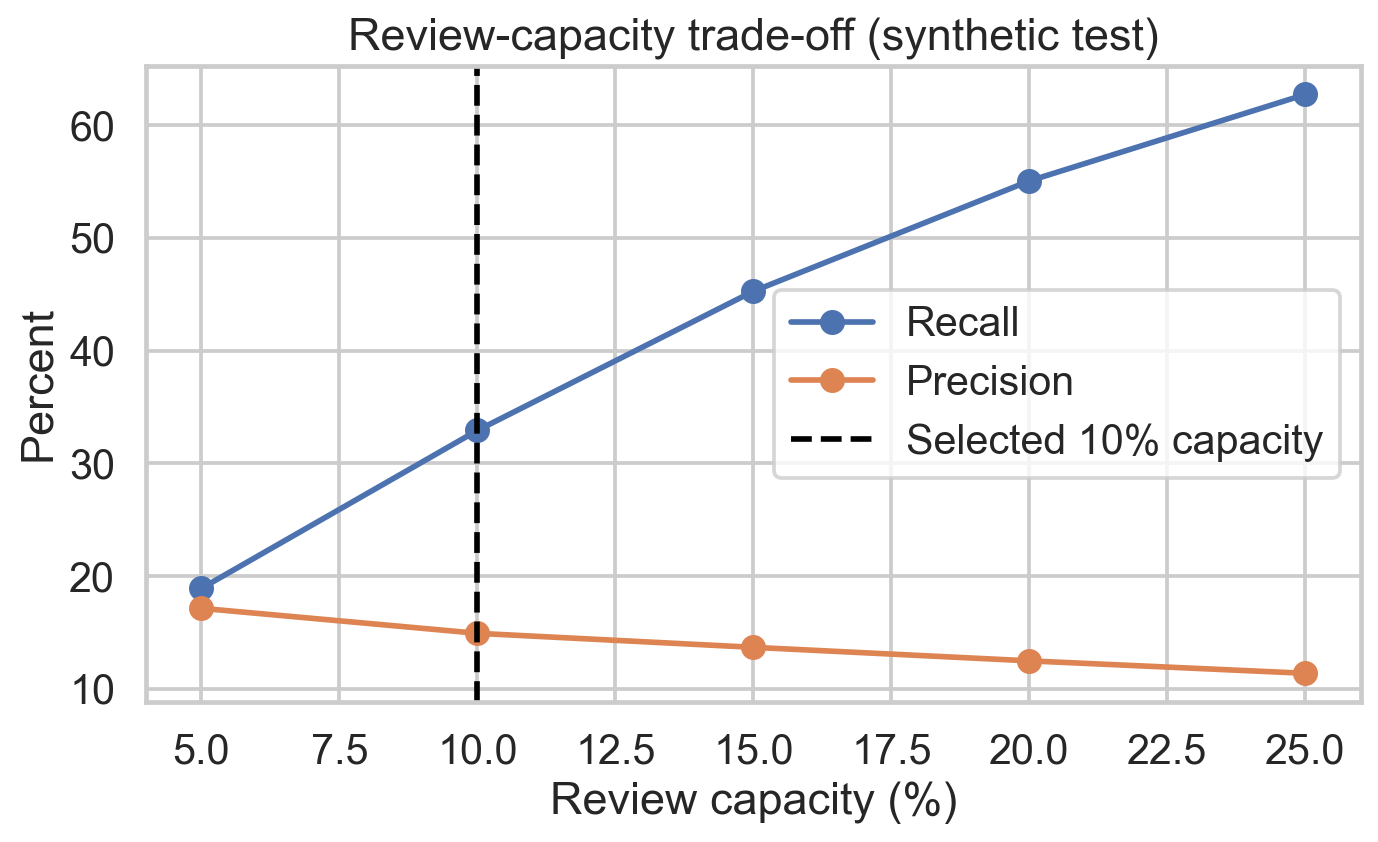
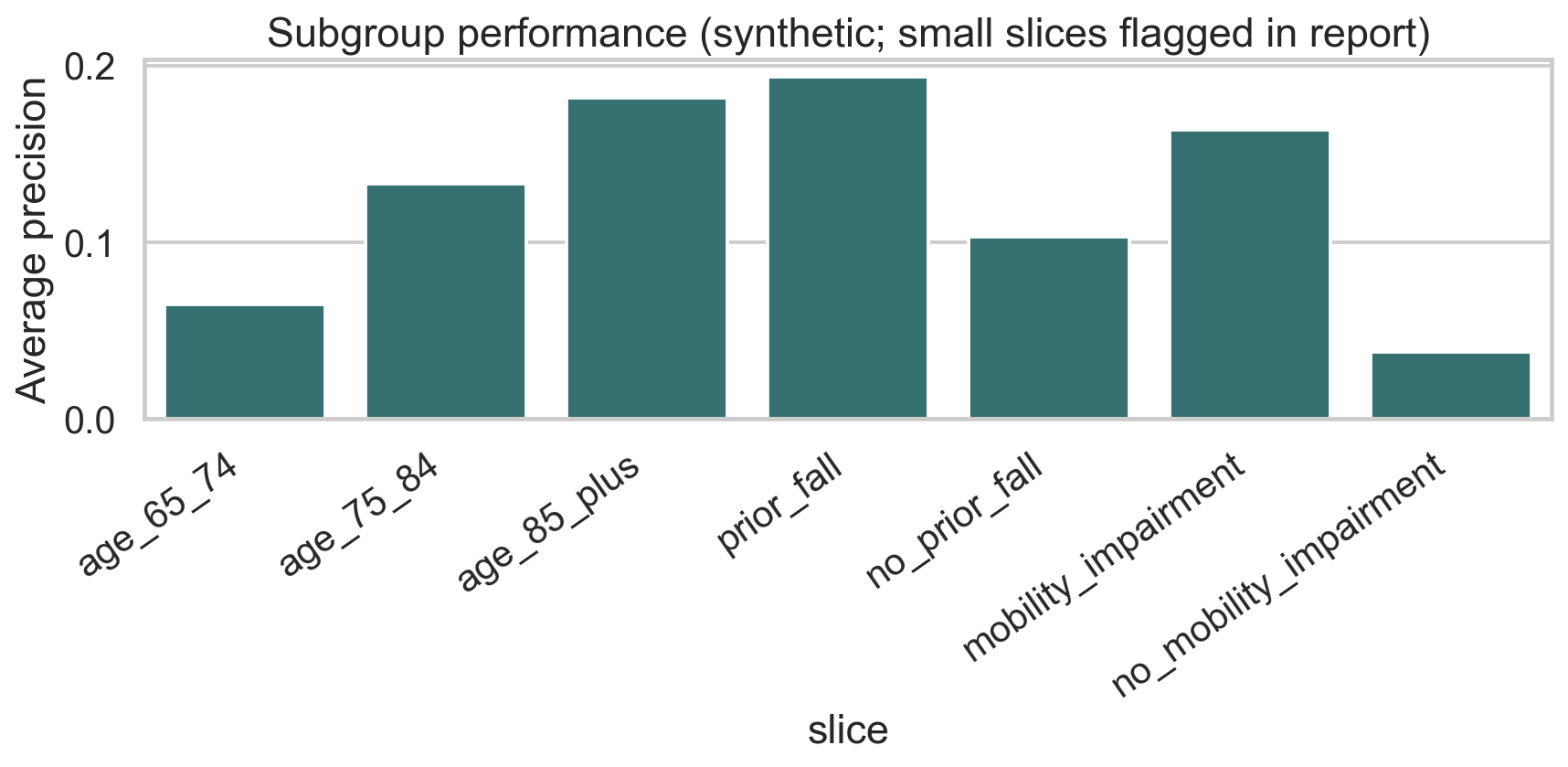
The selected logistic model is evaluated with average precision, calibration, subgroup slices, confusion matrices, and recall at fixed review capacities. The held-out evidence is intentionally shown beside prevalence and workload assumptions so a recruiter can inspect what the numbers do and do not establish.
Operational boundary
The system prioritises a conversation with a qualified reviewer. It does not diagnose a resident, recommend treatment, or claim clinical effectiveness. The project documents representation uncertainty, threshold assumptions, and the difference between a portfolio simulation and real-world deployment.
Reproducibility
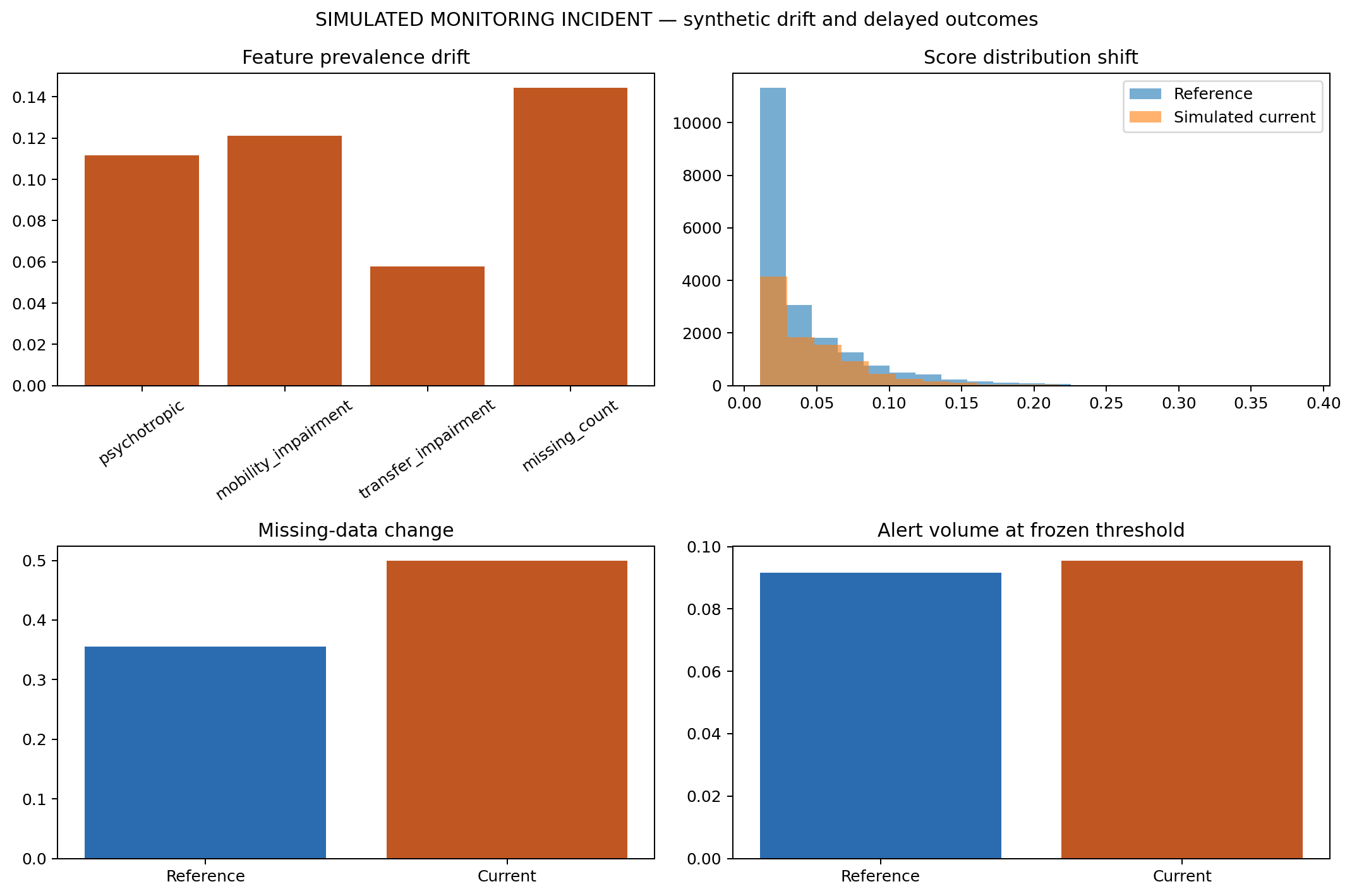
The repository includes data generation and validation, leakage controls, baseline and candidate models, demo records, evaluation reports, failure analysis, and simulated monitoring for drift, missingness, alert volume, and delayed calibration.
Selected evidence
Each visual answers a specific question about system behavior. Read the caption and limitation together.