Decision and workflow
This system scores fictional mental-health inpatient discharge events for a 28-day return and supports transition planning. It is not a diagnosis, a clinical recommendation, or a substitute for follow-up planning by qualified care teams.
System approach
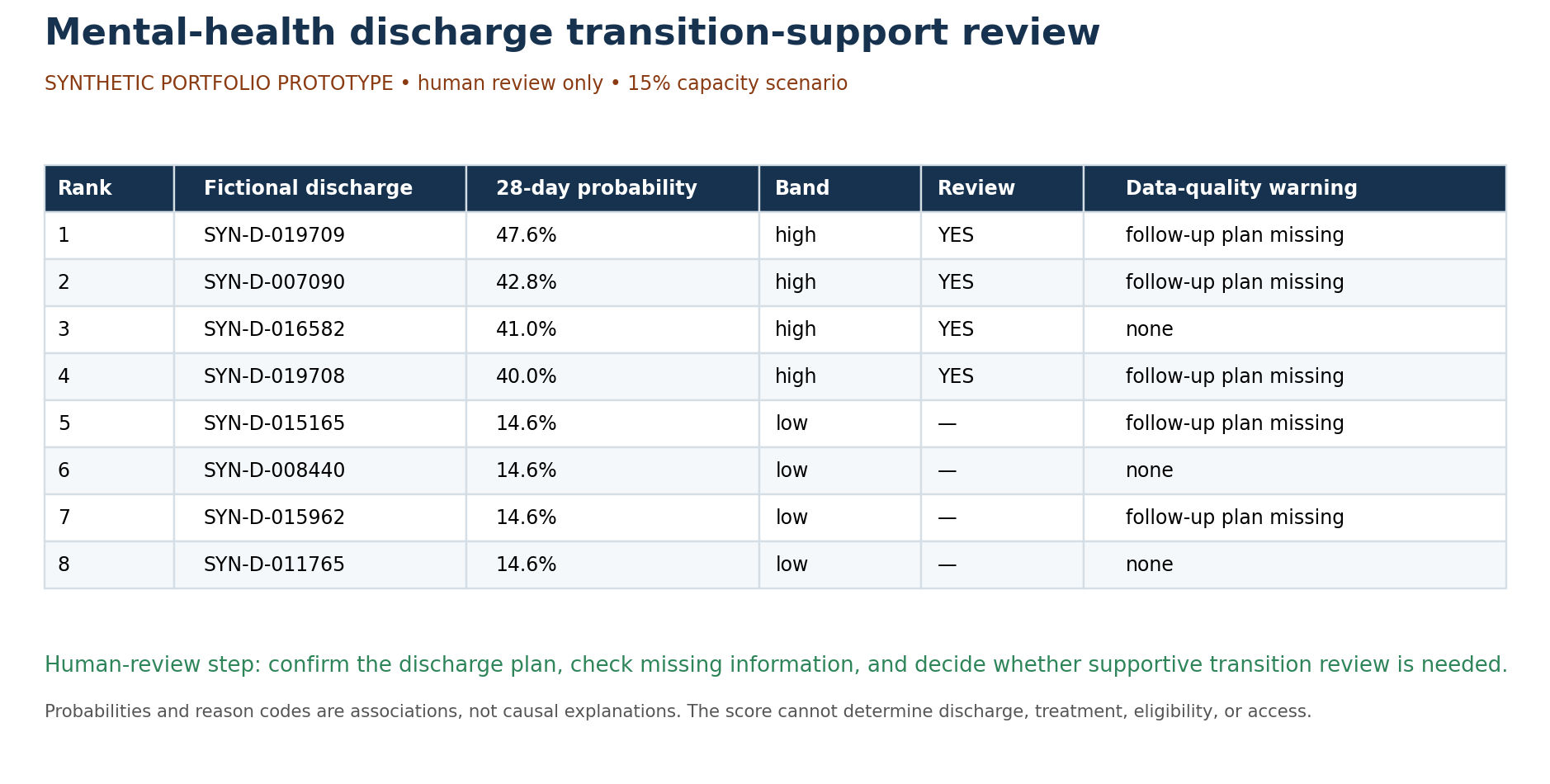
The workflow uses a patient-disjoint temporal split and compares prevalence/rules, logistic regression, and boosted trees. The review queue presents probability bands, perturbation-based reason codes, missing-data cautions, capacity controls, and an explicit human-review boundary.
Baseline and evaluation
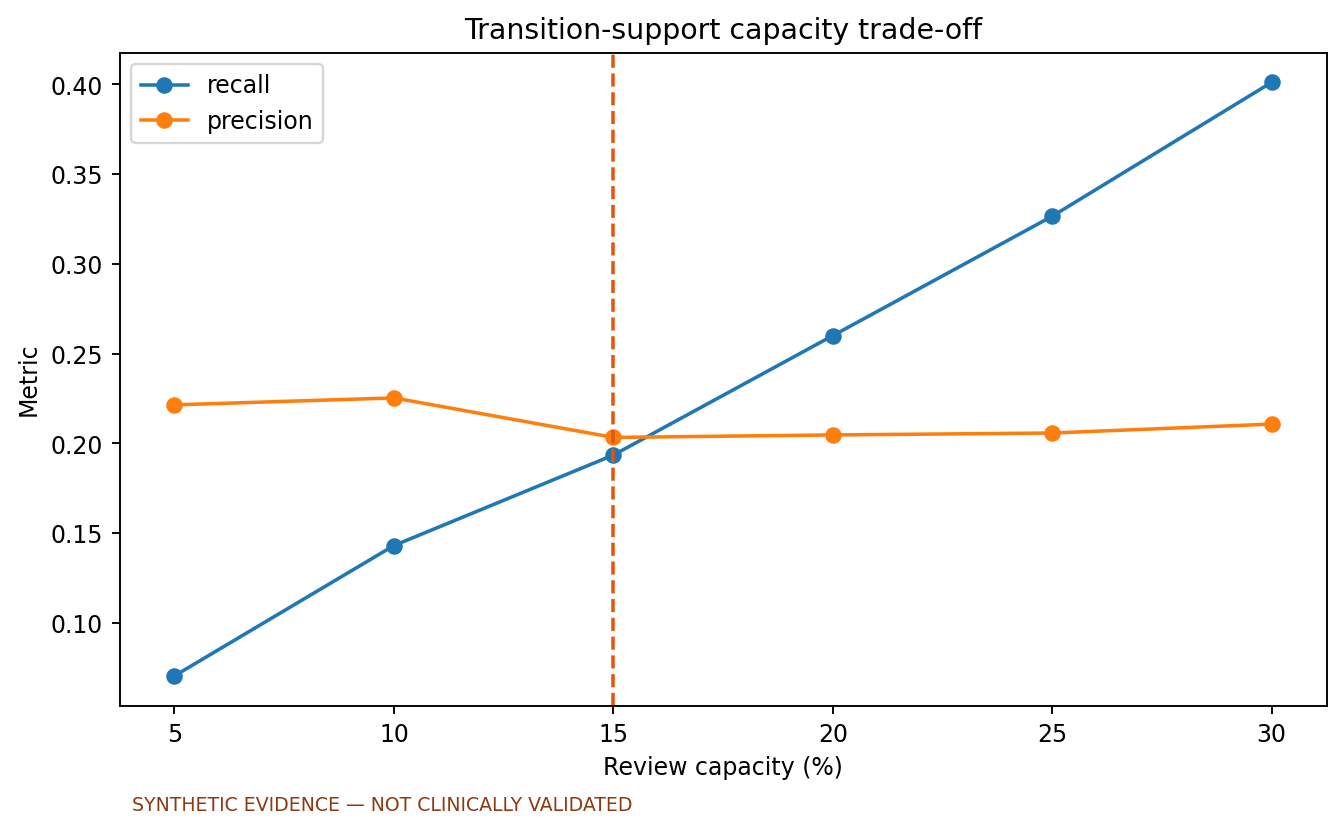
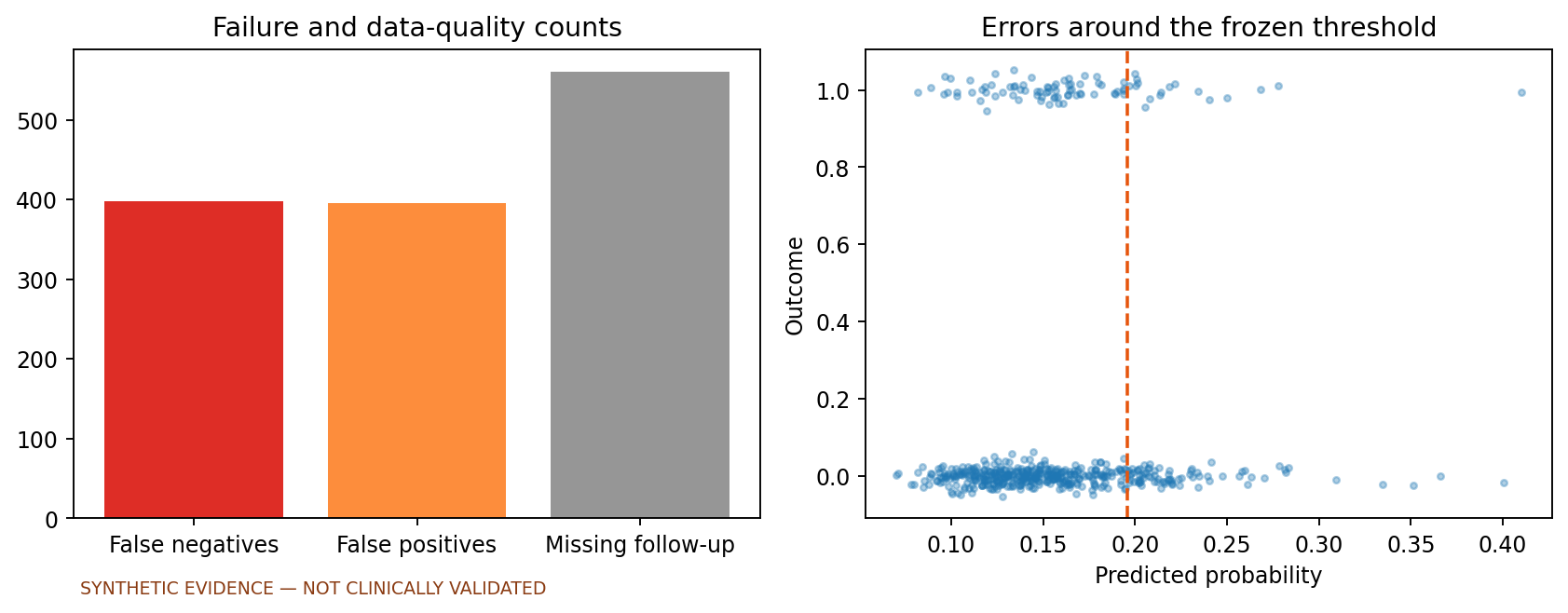
Evaluation covers PR-AUC, Brier score, calibration, review-capacity recall, subgroup behavior, failure cases, and sensitivity to label definitions. Planned and unplanned returns, incomplete network follow-up, and post-discharge workload are treated as modelling decisions that must stay visible.
Operational boundary
The queue supports a reviewer deciding where transition-support attention may be useful. It does not label a person as high risk in a clinical sense or imply that an intervention will change an outcome. Small groups are suppressed and limitations are shown alongside the visuals.
Reproducibility
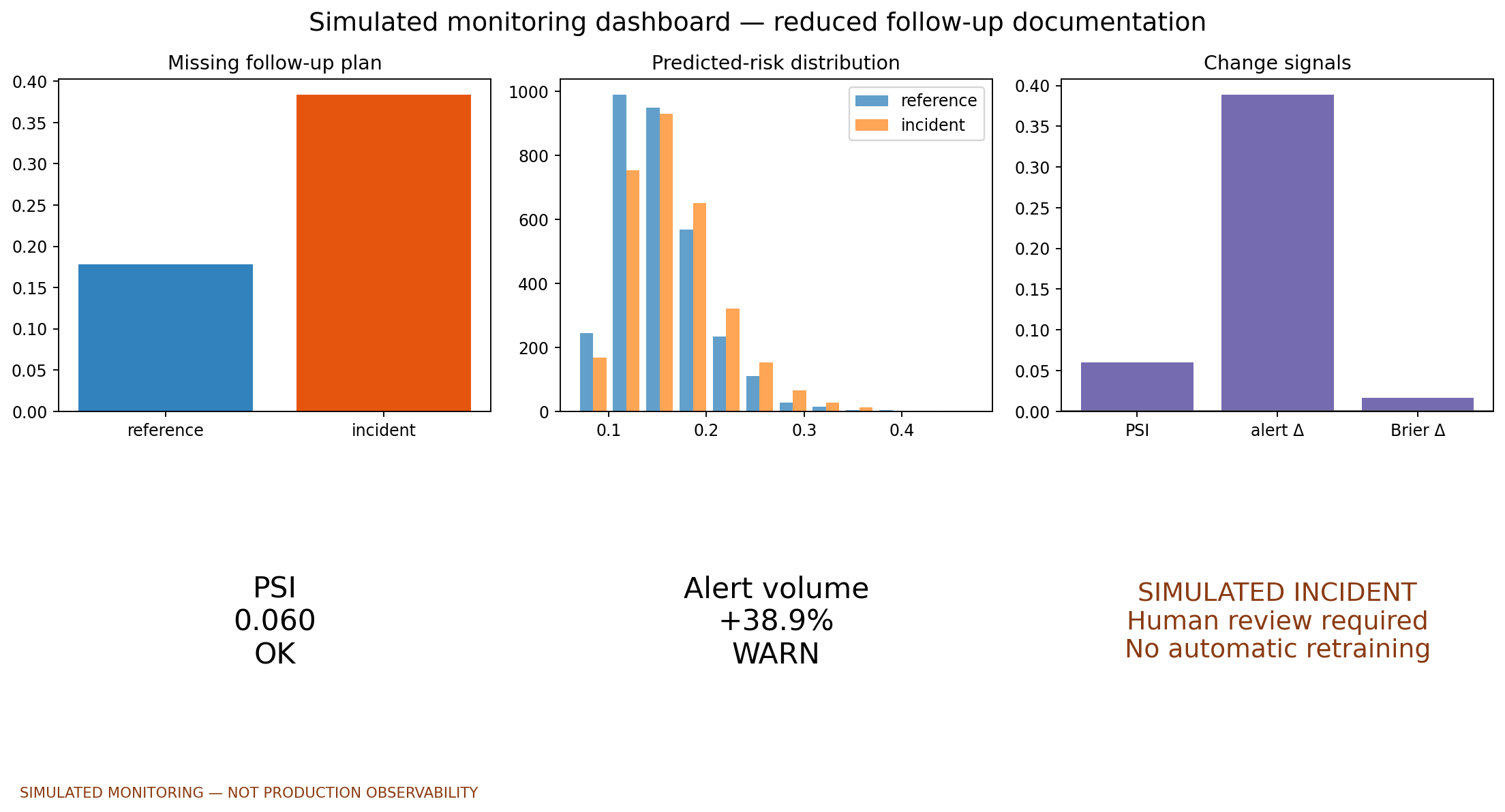
The project includes synthetic cohort generation, data cards, model metadata, demo records, evaluation and monitoring reports, failure analysis, and a simulated documentation-drift incident with response thresholds.
Selected evidence
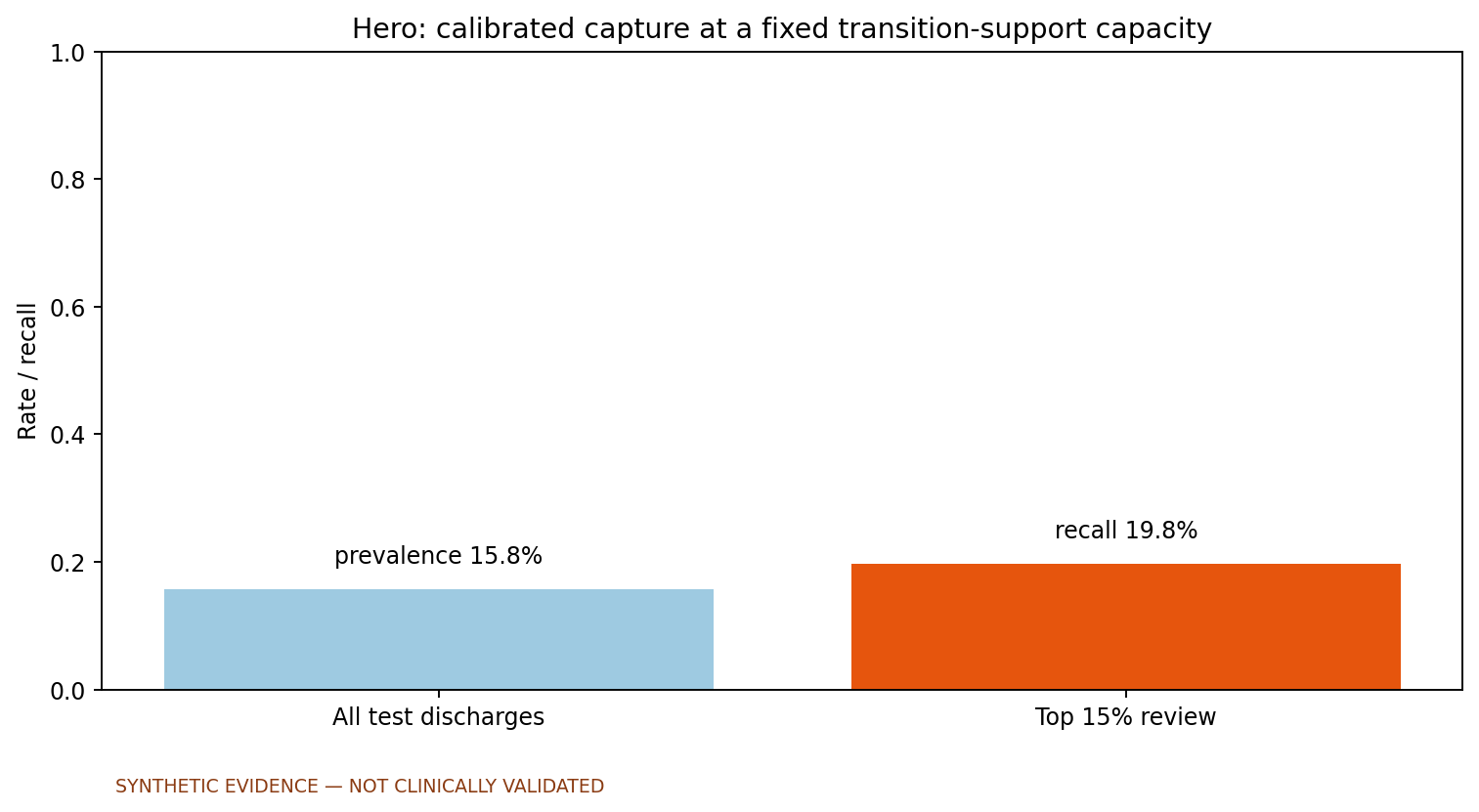
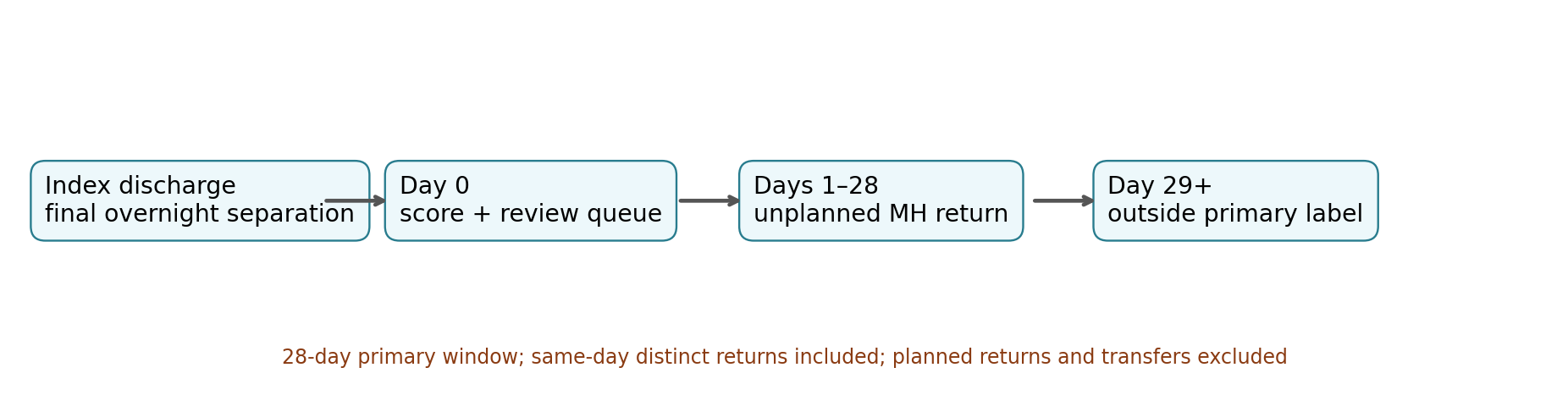
Each visual answers a specific question about system behavior. Read the caption and limitation together.